

2025 was a year of beginnings: new life in our prison nursery, new spaces in our housing units, new staff on the corrections team and new ways to improve lives for safer communities. Here are just a few things the Missouri Department of Corrections accomplished in 2025:
1. We had a baby boom!

The Missouri Department of Corrections Prison Nursery Program opened in February 2025 and welcomed its first baby, Dawson, in March. So far more than 15 moms and 16 babies (one set of twins) have been part of the nurturing community created at Women’s Eastern Reception, Diagnostic & Correctional Center (WERDCC) in Vandalia, a meticulously remodeled housing wing that holds cozy communal spaces, a colorful infant development center, a private kitchen and yard, and seven bedrooms for up to 14 babies and their moms. Eligible incarcerated women who have a due date within 18 months of their release stay with their babies in the nursery while also taking classes, completing treatment programs and learning life skills. Paid caregivers, who are fellow WERDCC residents, occupy rooms on the second floor of the wing, support the new moms and provide childcare for the babies.
2. We sewed up support for Missouri kids.

A short documentary directed by filmmaker Jenifer McShane and added to Netflix in May 2025 highlights the efforts of a Restorative Justice Organization quilting group at South Central Correctional Center (SCCC) to create a personalized, handmade quilt for every foster child in Texas County. The Quilters, winner of multiple independent film festival awards, focuses on the RJO participants’ work in the prison’s sewing room, showcasing the men’s struggles, triumphs and sense of pride as they craft quilts for area kids. Since then, support for quilting programs poured in from throughout the world in the form of monetary contributions, personal notes and enough fabric and sewing supplies to fill more than 16 pallets in the Central Office warehouse. Donations support not only the SCCC team but also programs around the state, including the state’s largest prison quiltmaking operation, at Jefferson City Correctional Center (JCCC), where volunteers make weighted quilts, vests and huggable buddies to soothe kids with autism.
3. We went fishing.
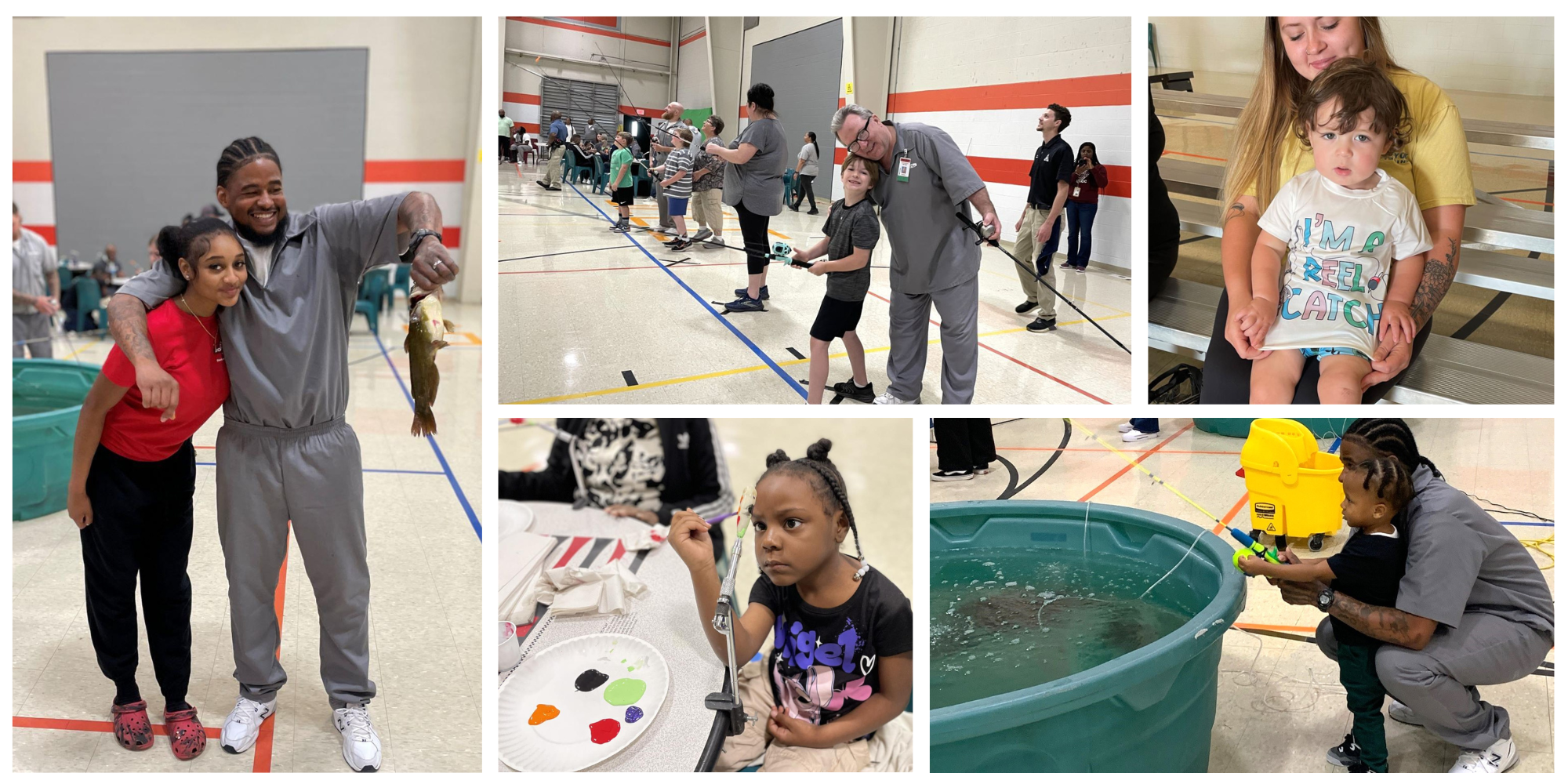
This year a collaboration with the Missouri Department of Conservation united residents of state prisons with their families for fun-filled days of fishing and outdoor-adventure activities known as Fishing with the Family. Pools filled with native Missouri fish were set up inside prison gyms, where residents and their families painted fishing lures, cast lines and caught fish — or gathered outdoors to set up tents, interact with animals and learn about nature. We also continued the Empowering Dads program and expanded regular family restoration visits, during which Missourians can spend time with incarcerated family members in prison yards — playing sports and games, having picnics and forming stronger bonds.
4. We rescued a teen from the bottom of a ravine — with a little K9 help.

Cody Trenkle, a 13-year-old boy in St. Francois County, was zipping around on his skateboard near Goose Creek Lake in July, when he tumbled down a 240-foot-deep ravine. He had been missing for more than three days when the Farmington Correctional Center (FCC) dog team joined the search. It took Daryl, a six-year-old bloodhound, and his FCC teammates only 21 minutes to find the boy, who was seriously injured and dehydrated. After a month in the hospital, Cody made a full recovery, in time to start ninth grade. Also this year, the Northeast Correctional Center (NECC) dog team, with star bloodhound Miles, tracked an Alzheimer’s patient for 10 miles and another missing person for five, on the same day. They ultimately won the Missouri Department of Corrections 18th Annual Tracking Dog Training Event this fall.
5. We compensated staff for tough jobs.

A new pay plan approved by the Missouri General Assembly and signed into law by Governor Mike Kehoe created a 1% pay raise for all Missouri state government employees, totaling $6,978,542 for corrections staff. It also included additional stipends of $1 per hour for staff assigned to restrictive housing units (totaling $2.45 million) and $.75 per hour for staff assigned to maximum-security men’s facilities (totaling $6.5 million). These changes brought the total investment in corrections staff pay increases since 2017 to $221.4 million. We also planned new specialized training modules for jobs in maximum-security and restrictive-housing environments, which are characterized by greater challenges, including higher rates of assault.
6. We honored heroes.

In a May ceremony, Director Trevor Foley presented the Director’s Award of Valor to six staff members for acting in a heroic or courageous manager, on or off duty, despite personal risk. Ashley and Matt Downs came to the aid of civilians involved in a vehicular accident. Julie Teague saved a 13-year-old neighbor being attacked by six dogs. Tiffany Trenary and Levi Fare protected each other and residents of a housing unit from an assailant armed with a prison-made weapon. And Jay Howe helped local law enforcement officers struggling with an armed juvenile offender. In June, three corrections professionals earned the Missouri State Team Member Award of Distinction for unwavering commitment to service and innovation. Ashley Robinett was honored for leadership, Travis Crews was honored for public service, and Tayluer Dunks was named State Team Member of the Month.
7. We showed off — and showed up for— our veterans.

In early 2025, U.S. military veterans employed by the Missouri Department of Corrections were featured on the Montel-Williams-hosted show Military Makeover in a special segment called “Operation Career.” One of the three team members featured, then-Moberly Correctional Center (MCC) Warden Rusty Ratliff, who established the Missouri Veterans Program for incarcerated veterans in 2017, later announced his retirement from the department and was feted by staff and residents alike. Later in the year, Crossroad Correctional Center (CRCC) presented Veteran Challenge Coins to staff who have served in the U.S. Armed Forces; Western Reception, Diagnostic and Correctional Center (WRDCC) staff took part in a veterans suicide awareness walk; MCC incarcerated veterans created and donated handmade hats and scarves to Catholic Charities Refugee Services; and a resident veterans group at Jefferson City Correctional Center (JCCC) bought and wrapped gifts for all kids visiting their dads during the holidays.
8. We expanded access to substance use treatment considered the gold standard.

After working with contractors Centurion and Gateway to implement medication-assisted treatment (MAT) and medication for opiate use disorder (MOUD) for incarcerated Missourians, this year we ensured more people can get the help they need. Now residents with substance-use disorder can self-refer for the treatment, which uses FDA-approved medications combined with cognitive-behavioral therapy, psychiatric care or other forms of psychosocial support both during and after incarceration.
9. We helped rescue dogs find new jobs.
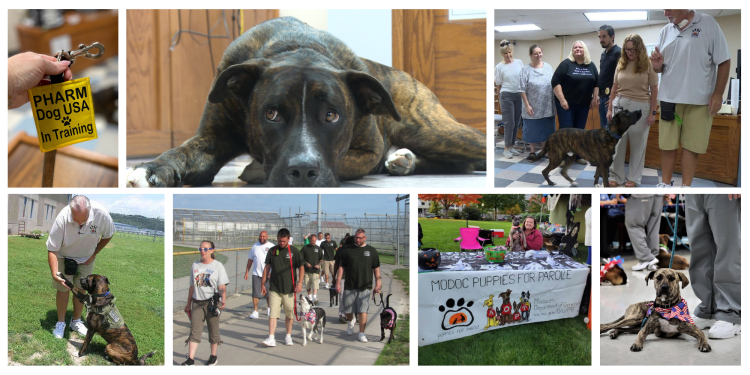
Our Puppies for Parole (P4P) program joined forces with Pets Helping Agriculture in Rural Missouri (PHARM). Dogs trained and socialized by incarcerated dog handlers in Missouri state prisons go to the PHARM, which provides additional training so dogs can help farmers who are elderly or disabled by performing day-to-day tasks such as opening doors, picking up items and carrying buckets. Bentley, a 3-year-old Plott hound, was placed with a PHARM family this year. Meanwhile, P4P programs throughout the state showcased canine talents with demonstration days, giving staff, residents and guests a chance to see all dogs’ new tricks. Nearly 8,000 dogs have been adopted through P4P since the program’s 2010 inception.
10. We set people up for job success.

This year we continued to make big strides in career and technical training, with more students completing programs such as the Aspire MO 2.0 Warehouse, Manufacturing and Supply Chain Training, whose graduates earn multiple U.S. Department of Labor certifications, as well as the In2Work food service apprenticeship, which yields National Restaurant Association certification. As 2026 gets started, we’re rolling out new vocational training options at Algoa Correctional Center. ACC will house the nation’s second tattoo apprenticeship program, where residents with artistic skills can become licensed tattoo artists while incarcerated (the first is at Western Reception, Diagnostic & Correctional Center) and a new barber training program. The work-release program through which ACC residents staff the Governor’s Mansion is evolving into an apprenticeship program certified by the U.S. Department of Labor.
11. We fed people.

Restorative Justice Gardens cultivated by resident volunteers throughout the state collectively yielded more than 10 tons of fresh fruits and vegetables for donation to Missouri food banks and other nonprofit organizations this year, while the Crossroads Correctional Center (CRCC) garden team donated 200 pumpkins to Girl Scouts and Future Farmers of America. Staff and residents at Southeast Correctional Center (SECC) once again teamed up with La Croix Church for six-hour stint of packing 171,072 Mobile Pack meals for kids around the world through Feed My Starving Children, and SECC offender organizations collectively donated $20,000 — a total matched by the nonprofit. Later in the year, staff took part in the Missouri State Team Member Food Drive, led by Governor Mike Kehoe and the Department of Social Services
12. We met celebrities.

This summer, Kansas City Royals pitcher Lucas Erceg celebrated his five-year “sober birthday” by visiting Boonville Correctional Center (BCC), where the professional athlete talked with residents about his struggles with addiction. In the fall, poet Reginald Dwayne Betts visited Women’s Eastern Reception, Diagnostic & Correctional Center (WERDCC) for a poetry reading and book signing. The formerly incarcerated founder of the prison literacy organization Freedom Reads and his team also installed two mini libraries at intake facilities, WERDCC and Fulton Reception & Diagnostic Center (FRDC). And in December, former Royals slugger and current Seattle Mariners hitting coach Kevin Seitzer also visited BCC to share his testimony.
13. We grew our leadership-development reach.

Back in 2019, Algoa Correctional Center (ACC) residents inspired by the Global Leadership Summit (GLS) — an annual two-day event that brings together leaders and motivational speakers in Chicago and is livestreamed to 79 countries and 400-plus venues (including multiple Missouri state prisons) — worked with ACC staff to develop an in-house “academy” wherein residents would spend more time grappling with GLS topics. This year the Global Leadership Academy (GLA), already in place in Jefferson City facilities, expanded to Eastern Reception, Diagnostic and Correctional Center (ERDCC); South Central Correctional Center (SCCC); Southeast Correctional Center (SECC); Farmington Correctional Center (FCC) and Moberly Correctional Center (MCC). Also this year, international GLS speakers visited Jefferson City and Algoa correctional centers to meet with incarcerated participants in person.
14. We attracted, trained and retained the best team in state government.

By the end of 2025, prison staffing levels had reached their highest point since before the 2020 pandemic, as recruitment numbers rose. To accommodate the influx of new staff, we expanded trainee housing capacity at the year-old Academy for Excellence in Corrections (AEC) in Cameron; we can now accommodate up to 147 cadets on site in private rooms for the duration of each basic training session. We also made strides in work-life balance for our teams. We extended health and wellness services and established special Correctional Family Wellness events for their families, who learn about the challenges and benefits of having a loved one working on our team.
15. We looked out for staff wellbeing.

In 2025, the Missouri Department of Corrections implemented the revolutionary, culture-altering framework known as Zero Suicide, the first initiative of its kind to be implemented in the U.S. in the field of corrections. The Zero Suicide rollout included courses, toolkits and a holistic philosophy shift aimed at better preparing staff to effectively respond with confidence when a teammate is in crisis. We continued Post Critical Incident Seminars (PCIS), three-day intensively focused therapeutic events designed to assist corrections personnel who have experienced traumatic stress following involvement in a serious incident. And we trained more staff to become certified in Critical Incident Stress Management (CISM); now more than 250 team members are equipped to handle crisis situations and provide peer support.
16. We took restrictive-housing reform to the next level.

In 2024, two Missouri state prisons piloted a three-phase restrictive housing model that focuses attention on offenders who pose true safety and security threats while reducing or eliminating disciplinary sanctioning for those who don’t; both facilities saw reductions in disciplinary sanctioning, length of time in restrictive housing and aggressive/assaultive incidents within the units. This year, we expanded the model to two additional facilities, with similar results. We also piloted a model for sanction-reduction wings, where people living in restrictive housing can gradually earn back privileges.
17. We launched research-driven housing innovations.

Thanks to a collaboration with the University of Missouri, housing units at Moberly Correctional Center (MCC) and Women's Eastern Reception, Diagnostic & Correctional Center (WERDCC) were transformed into vibrant new living spaces this year. An MU School of Social Work-led research team embarked on a five-year grant-funded project to study a novel intervention aimed at improving living and working conditions inside Missouri prisons. In addition to introducing transformative approaches to communication, community connections and self-improvement, the researchers are exploring the effects of changes to the physical environment, including increased privacy, comfortable communal spaces and aesthetic upgrades. In contrast with honor dorms, which reward pro-social behaviors with attractive housing and other privileges, this project draws participants from the general population, seeking to learn how living environments affect behaviors. The program, known as the Missouri Prison Transformation Project (MPTP) — which is funded by a grant from the philanthropic group Arnold Ventures and founded upon evidence-based research from Western European prison models — seeks to improve the quality of life for people living and working in correctional institutions.
18. We opened a new honor dorm in a maximum-security prison.

This year, Jefferson City Correctional Center took maximum-security honor dorm living to a new level with a redesigned space, fresh paint colors, and furniture designed for comfort and community. Residents who engage in pro-social behaviors, avoid major conduct violations and garner positive recommendations from staff are rewarded with a greater freedom of movement and a more comfortable, communal living environment. Facility administrators also plan to introduce special game-filled family visit days to be held in a park-like environment on the prison grounds – another first for maximum security.
19. We assembled a national gathering of correctional industries.

Missouri Vocational Enterprises (MVE) hosted the 2025 conference for the National Correctional Industries Association (NCIA), an international nonprofit professional association for correctional industry agencies and apprenticeship programs. Members from throughout the U.S. gathered in St. Louis in mid-April for a four-day training conference that included virtual MVE tours, networking and talks on industry best practices. MVE orchestrated a complex event, while fellow members of the corrections team gave presentations on the Prison Nursery Program, the incentive-based housing program Dynamo, collaborative reentry services and other innovations. Inside our facilities, each month more than 1,100 residents held MVE jobs, with more than 550 enrolled in certified apprenticeships that help prepare them for post-release careers.
20. We went to school.

Each month in 2025, about 3,300 incarcerated students received academic education services, with 271 completing high school equivalency by the end of the year. Two cohorts of incarcerated Hannibal LaGrange University (HLGU) students completed the Freedom on the Inside Program and earned bachelor’s degrees in biblical studies, qualifying the 31 graduates to serve as peer ministers. The Missouri Department of Corrections maintains partnerships with eight degree-granting colleges and universities, giving incarcerated Missourians statewide access to in-person and tablet-based higher education; in 2025, 1,540 were enrolled in degree programs.
21. We boosted reentry readiness.

As the first state in the U.S. to sign on to the national initiative Reentry 2030, Missouri has a longstanding commitment preparing people for post-incarceration success — boasting dozens of community partnerships in every region and a dedicated reentry center in every state prison and transition center. In 2025, we extended digital access to reentry services, partnering with St. Louis University to provide residents of eastern-region facilities with Transformative Workforce Academy (TWA) access, with the Department of Higher Education and Workforce Development (DHEWD) to create the Career Edge Missouri Reentry Connect site, and with MO HealthNet on Medicaid application access. In Fiscal Year 2025, nearly 70,000 residents of state prisons and transition centers visited on-site reentry centers for help with employment, housing, vital documents and more.
22. We gave back.

Members of the Missouri Department of Corrections team remained committed to the community in 2025. Team members supported Special Olympics Missouri through the piercing Polar Plunge and the scorching Torch Run. We played in the 25th Annual Director’s Cup golf tournament and raised more than $45,000 for the Missouri 10-33 Benevolent Fund, a statewide charity designed to assist the survivors of public safety officers who have given their lives in the line of duty. We also emerged as the leader in the Missouri State Employee Charitable Campaign (MSECC), pledging more money ($112,393!) than any other state government agency and raising $19,485 at 16 events.
23. We made worksites and communities safer.

On the heels of last year’s changes to rules regarding items allowed inside facilities, the Division of Adult Institutions (DAI) took the next step to boost security and mitigate contraband by implementing entry point standardization statewide, ensuring checkpoint officers consistently follow a common process and that visitors and staff know what to expect. DAI joined the Division of Probation & Parole (P&P) in implementing a new initiative designed to help identify security threat groups (STGs) inside and outside state prisons and aggressively curb related illegal and dangerous activity. We also expanded electronic monitoring services to ensure that offenders on out-count for medical treatment, court dates or work release wear electronic monitoring devices, to help us better protect public safety.
24. We got started on new Probation & Parole options for Southwest Missouri.

In 2024, the Missouri General Assembly allocated funding for the department to create our seventh community supervision center (CSC) in Southwest Missouri. This year, our teams got the plan underway, identifying a location and working out other logistics to help ensure that people on probation or parole in that part of the state have a residential center where they can get behavioral health treatment, housing assistance and other support to help them succeed outside prison, further reducing risk and recidivism in the state.
25. We got artsy — and patriotic.

Missouri state prisons are packed with artists. In celebration of the upcoming #America250, for this year's Missouri State Fair, talented artists at Jefferson City Correctional Center recreated famous scenes from the founding of the United States — featuring historical figures such as George Washington, Betsy Ross and Paul Revere — with inserts inviting fairgoers to become a part of history. (Governor Mike Kehoe, First Lady Claudia Kehoe and Missouri Department of Agriculture Director Chris Chinn joined in the fun.)