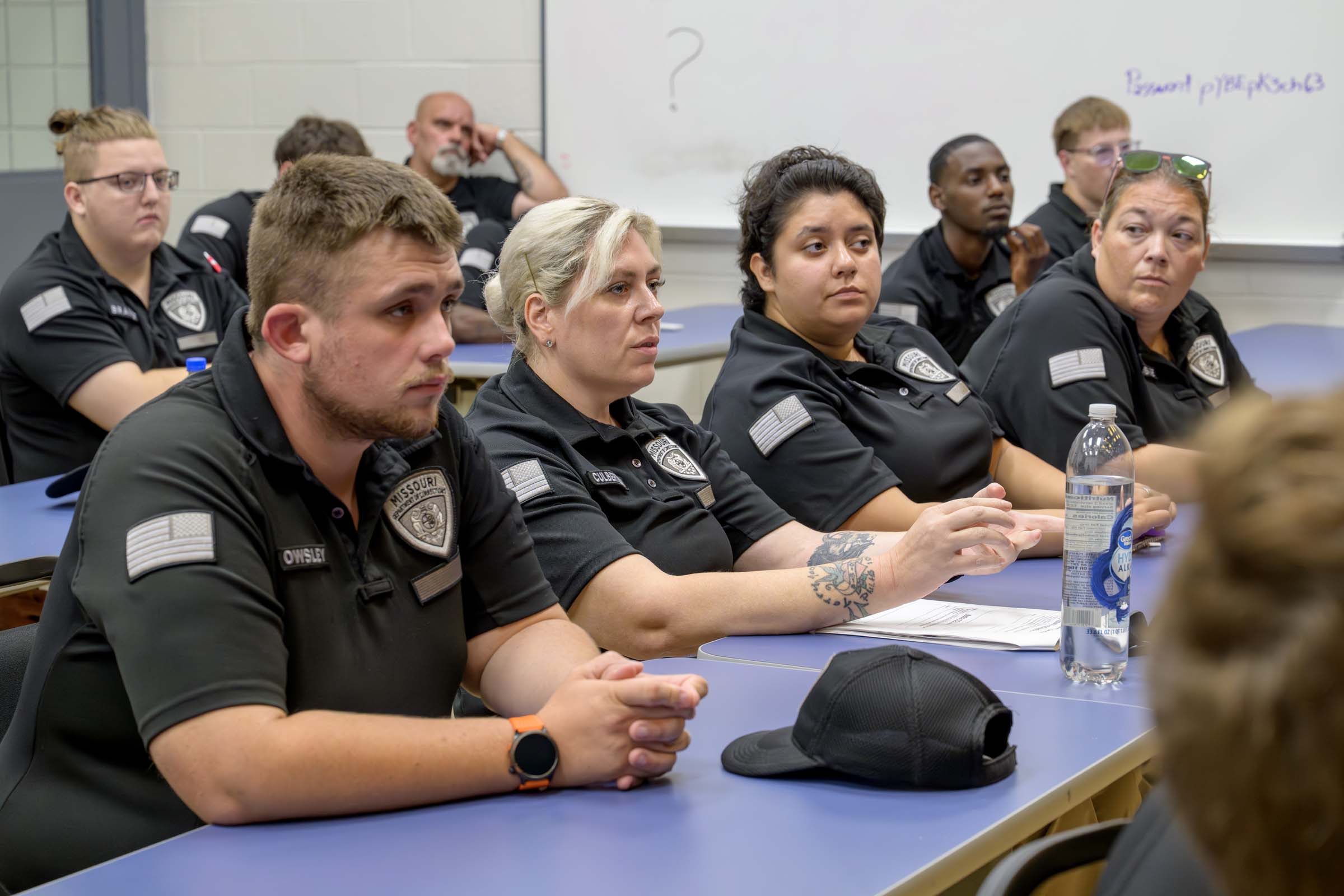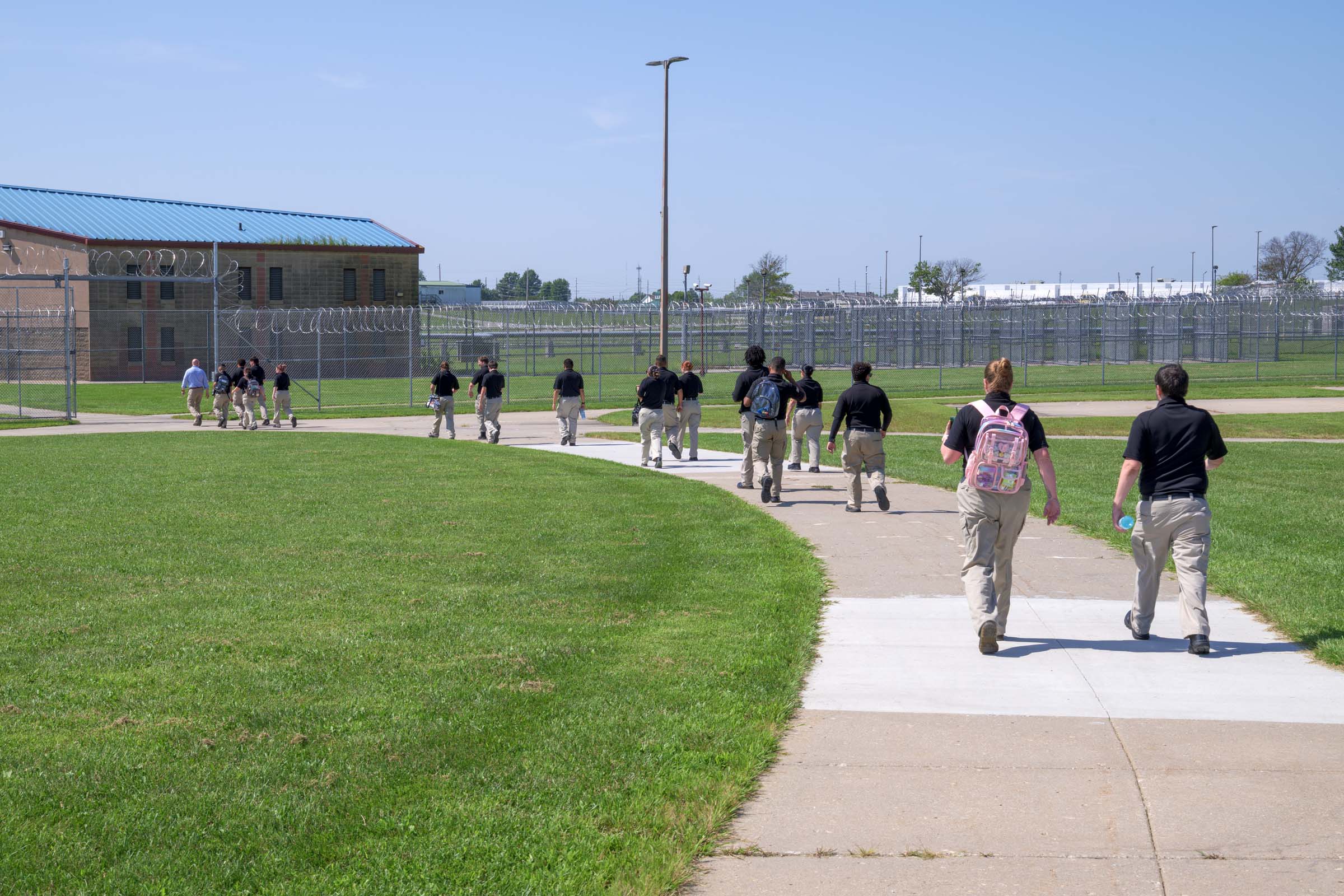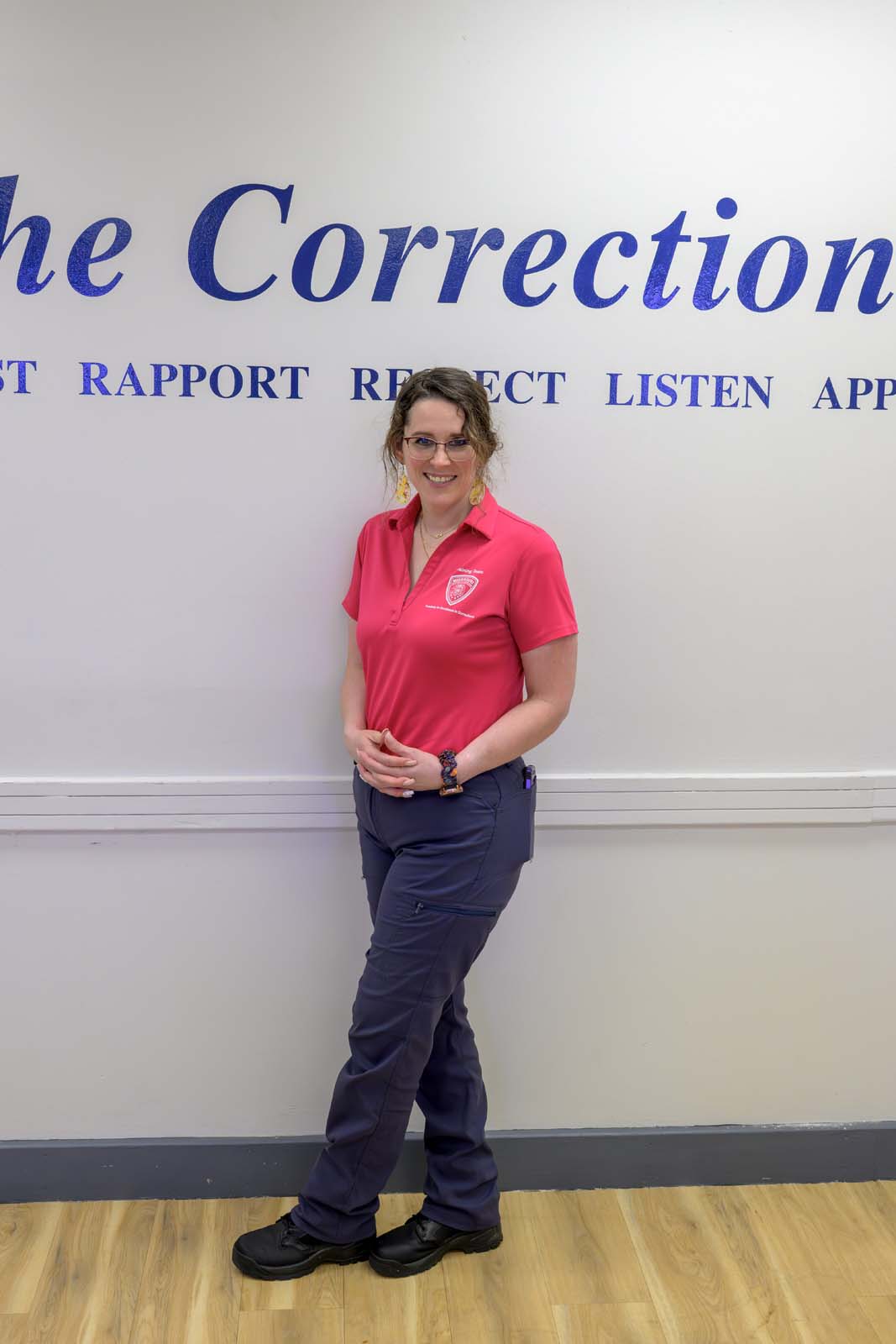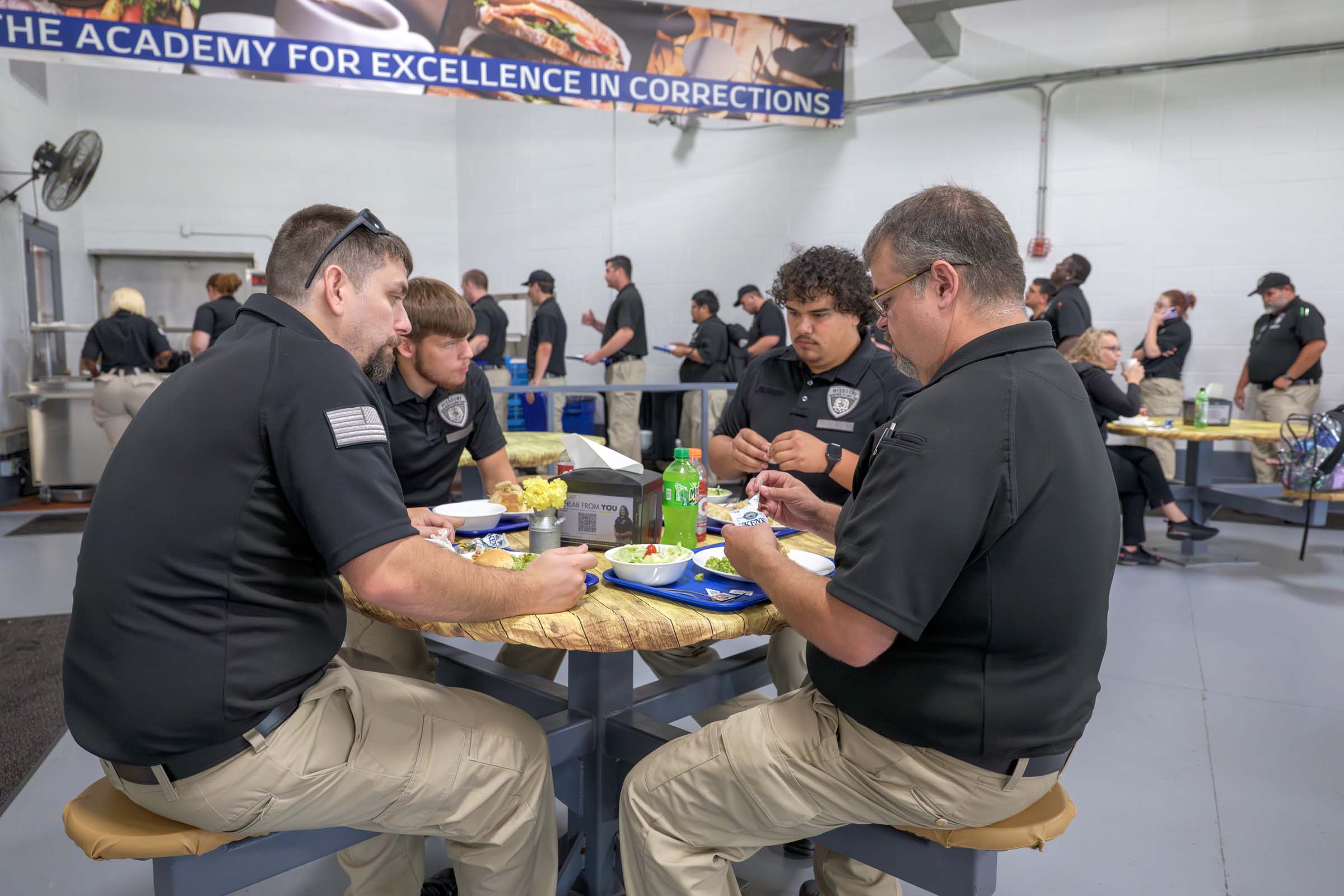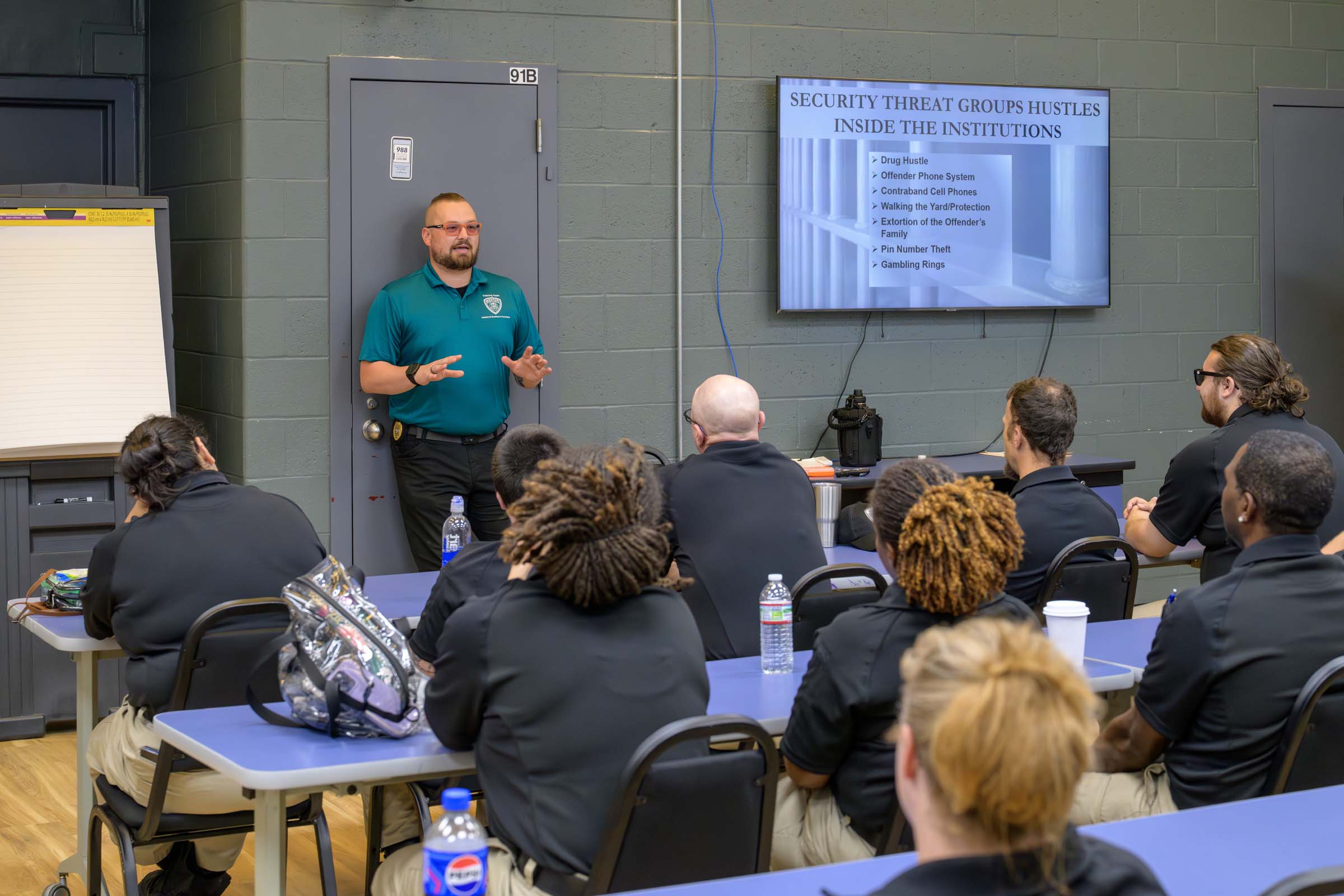
The Academy for Excellence in Corrections, staffed by dedicated administrators and instructors, expertly prepares the next generation of MODOC personnel.
Story by Marcus Wilkins. Photos by Garry Brix.
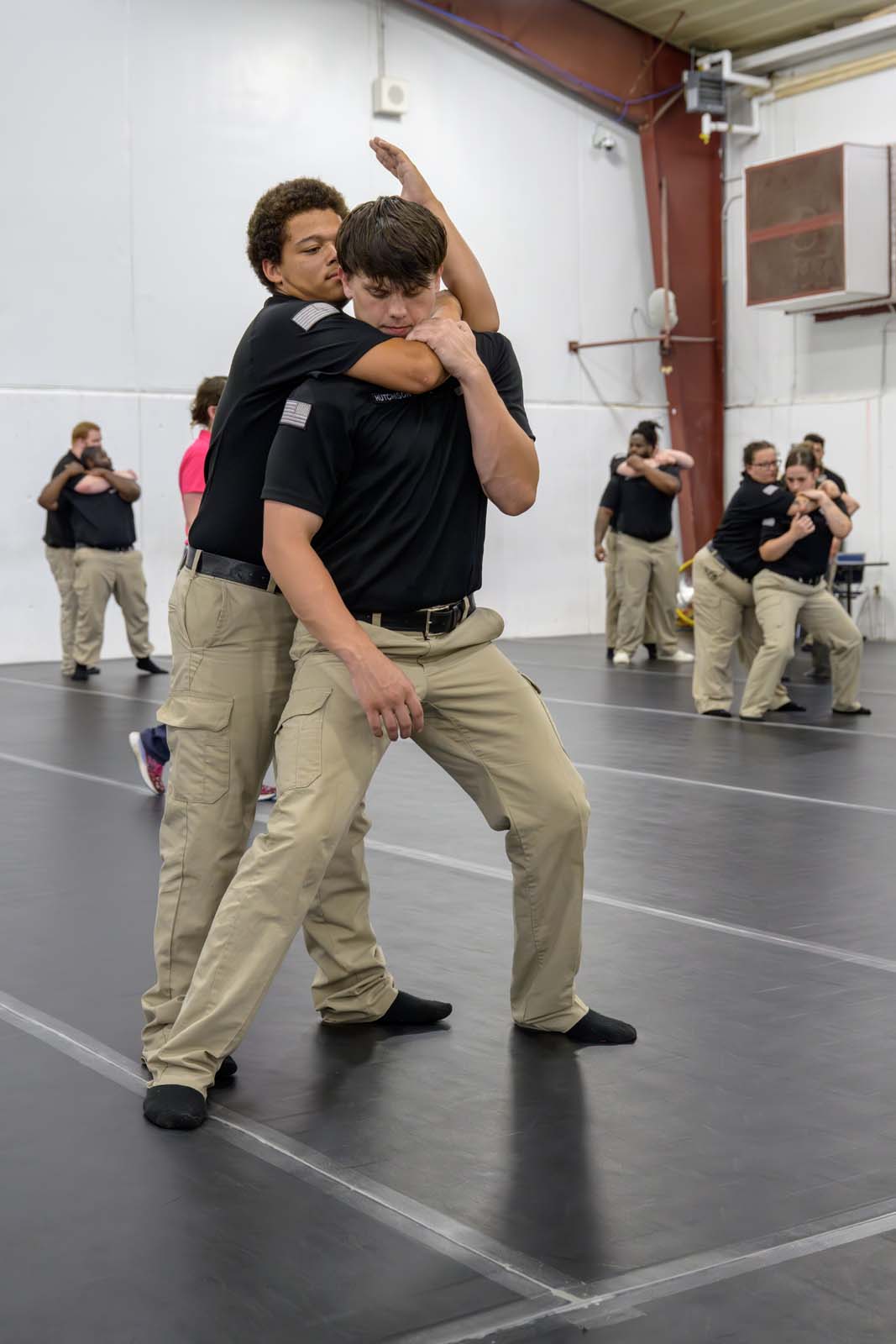
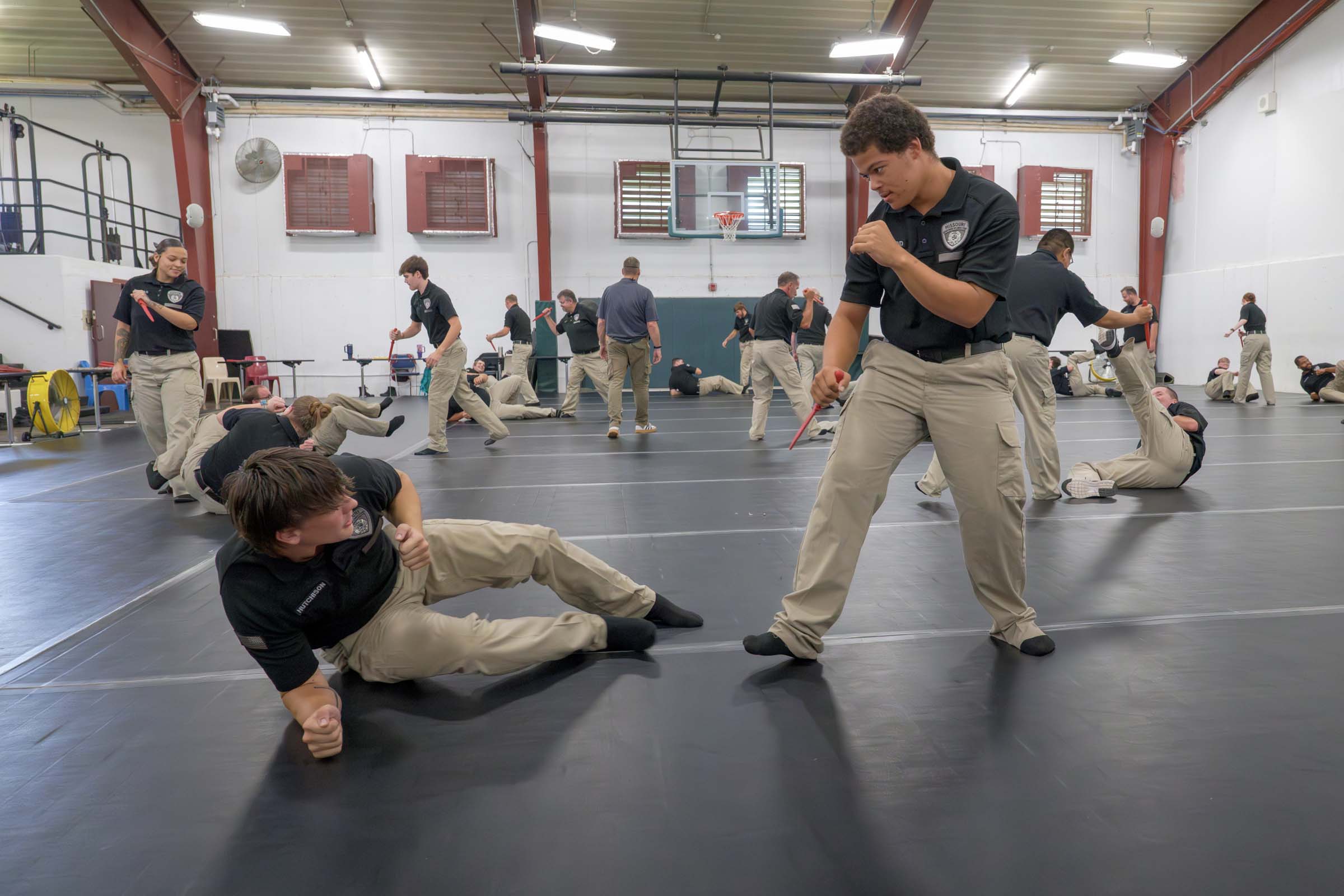
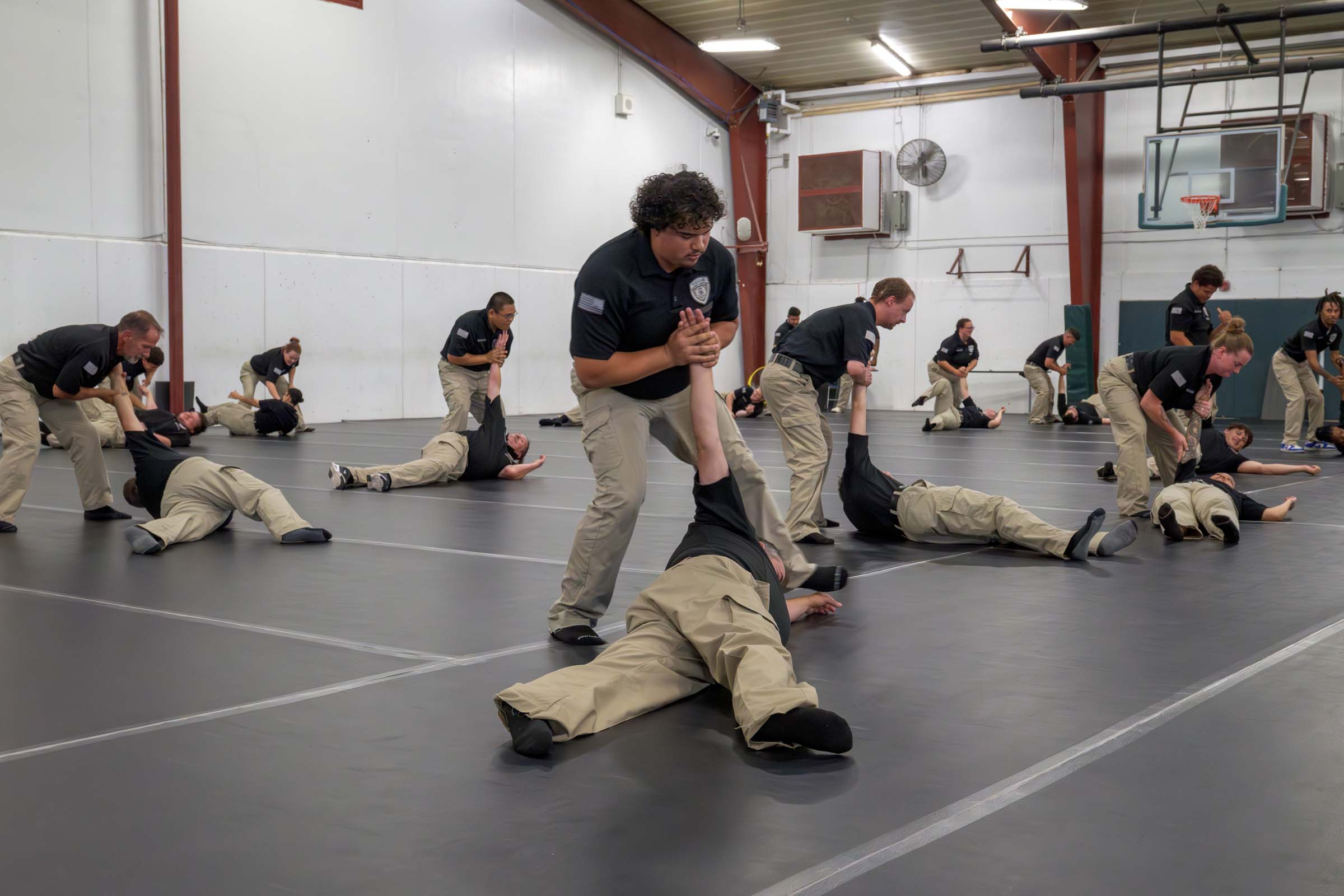
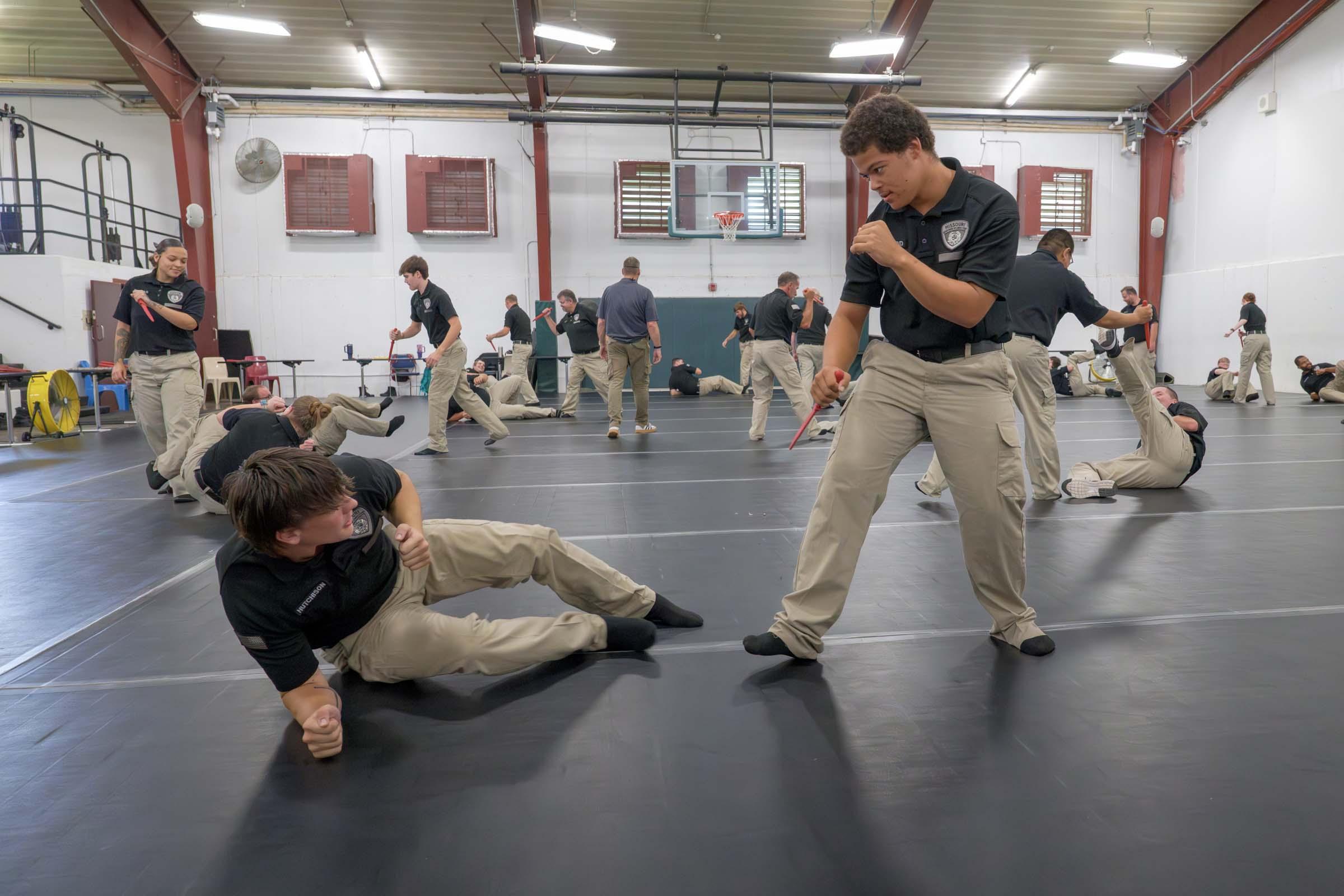
In the cavernous gymnasium of the Academy of Excellence in Corrections (AEC) in Cameron, Missouri, more than 30 cadets are paired up and locked in faux combat.
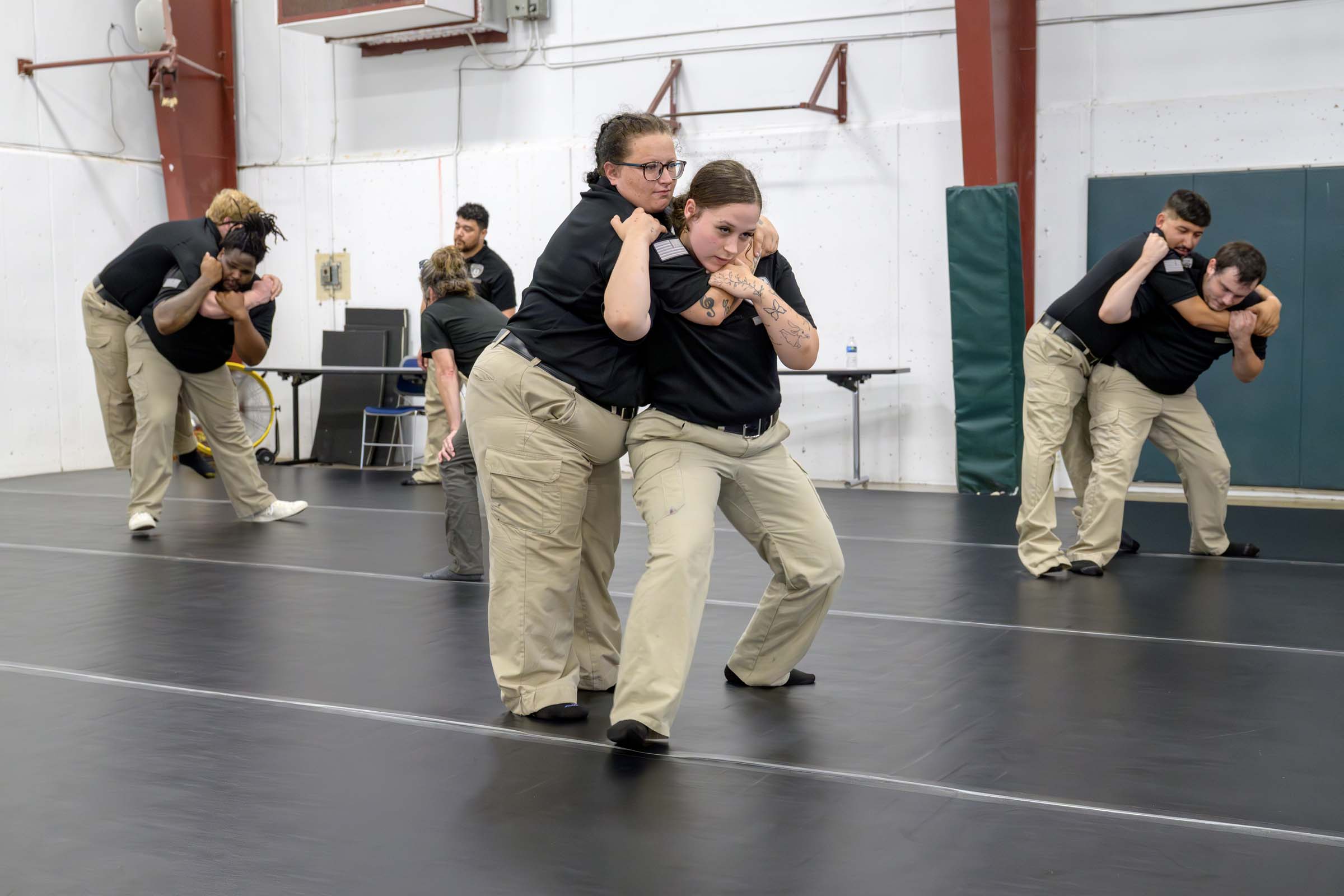
realistic training at AEC.
On a padded surface, they’re recreating the types of physical confrontations they might encounter on the job — grappling yet cooperating, teaching yet learning, struggling yet helping each other up off the mat.
Use-of-force training is one of many units for the enthusiastic class of future corrections officers, who lift one another up — literally and figuratively — at the Missouri Department of Corrections’ 19 institutions.
“When I look around this room, every one of these people would jump in for me if necessary,” said Rick Nogara, a CO-I at Southeast Correctional Center (SECC) in Charleston, Missouri. “Even if we don’t always get along, we still have the camaraderie to help each other. We’ve got each other’s backs.”

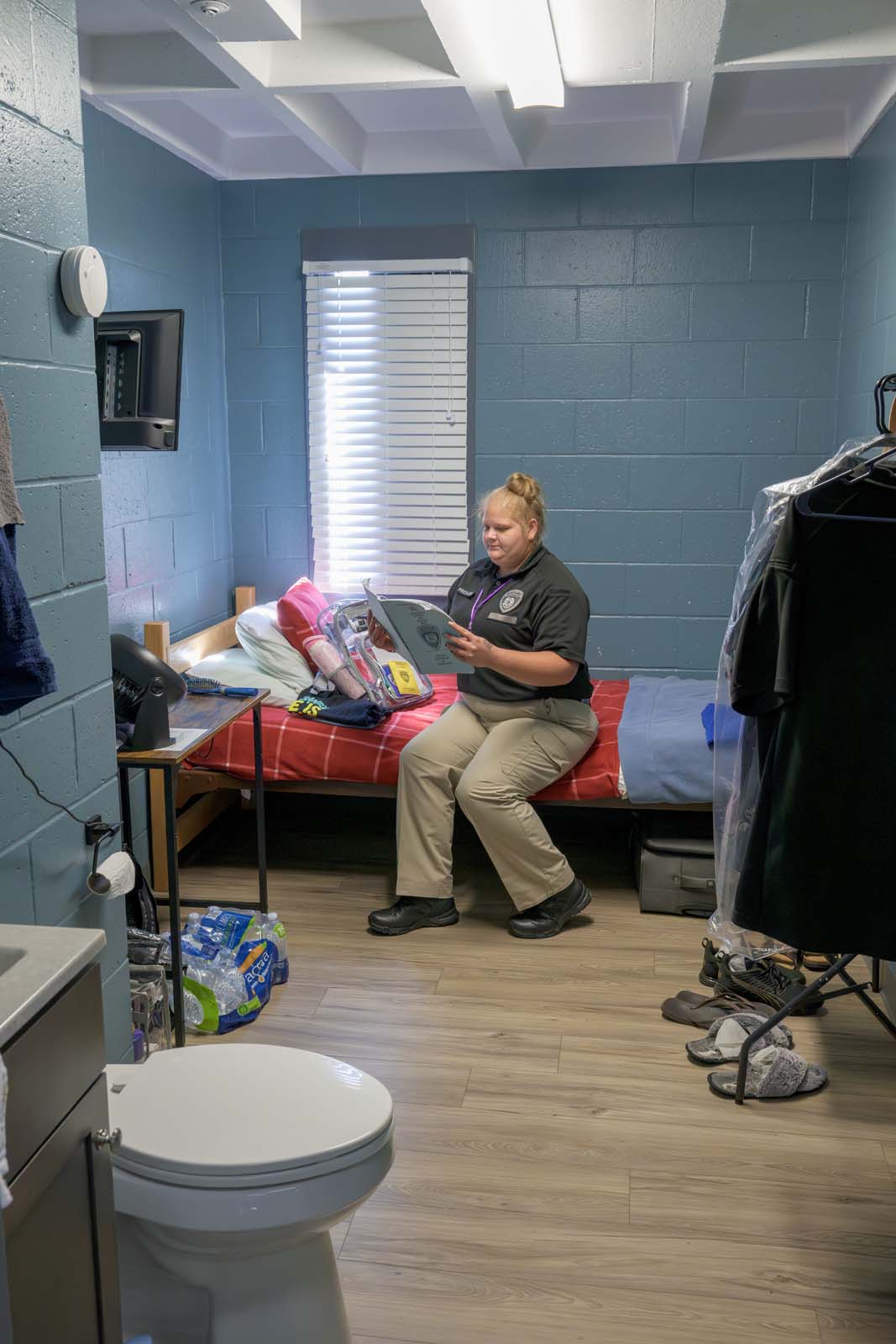
cadets all the creature comforts
during their four-day overnight
stay.
Nogara is one of 170 cadets currently working their way through the Officer Training Academy program at the AEC, a state-of-the-art facility built from the repurposed structure of Western Missouri Correctional Center (WMCC).
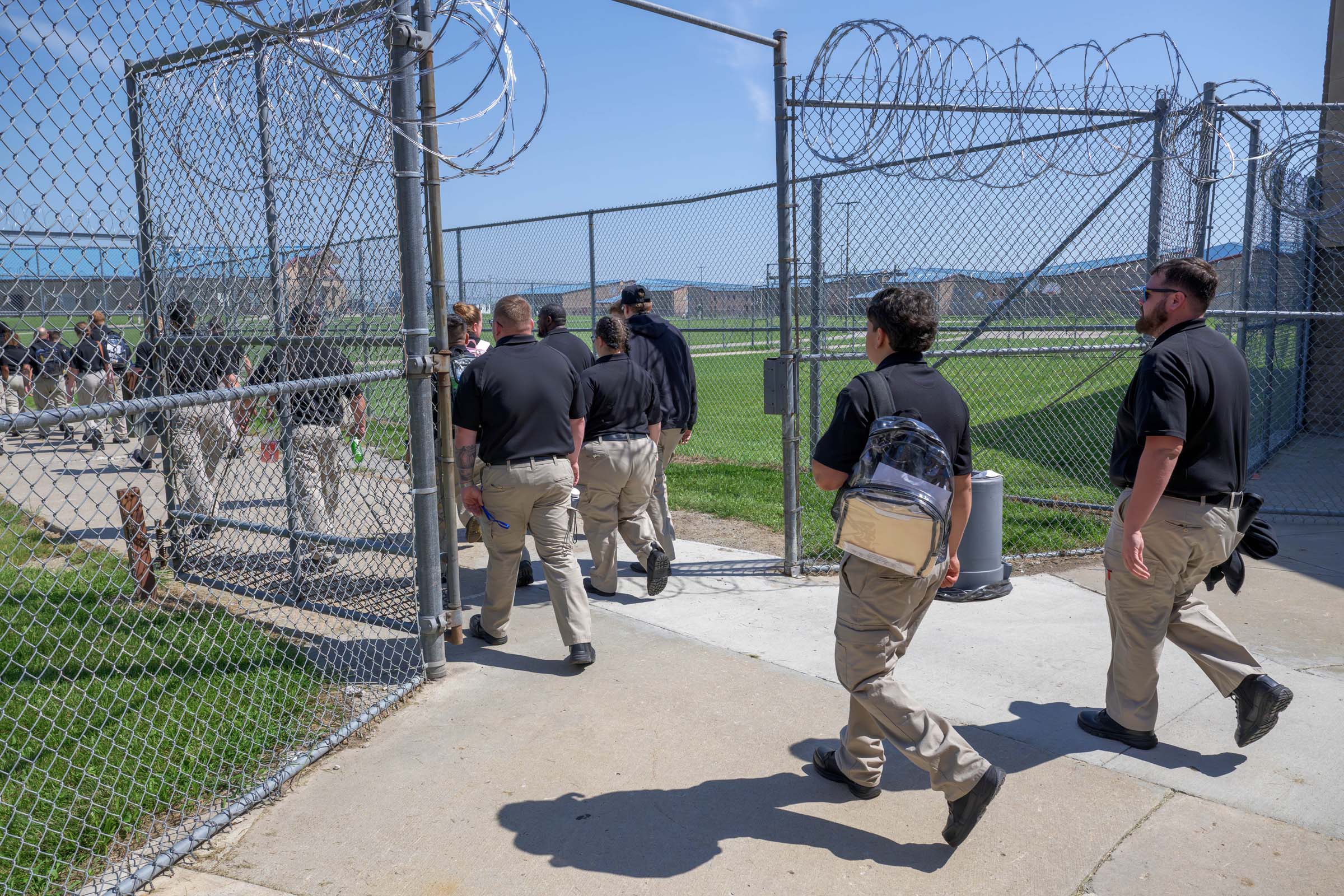
Opened in November 2024, the AEC gives cadets an authentic environment in which to practice cell searches, count procedures, yard drills and other essential skills.
They also stay overnight in the facility for four nights, sleeping in refurbished cells complete with HD TVs, Wi-Fi and laundry service.
Beyond the brick and mortar, however, the AEC is staffed by an experienced fleet of instructors collectively committed to sharing their wisdom and know-how. It’s a vibe that permeates every classroom, corridor and conference hall.
“As an instructor, you share your wealth of knowledge,” said Noah Montgomery, a corrections training officer with 23 years of MODOC experience. “Many of the people I learned from — who took bits and pieces from their careers and molded it into what now works for me — have retired or passed away.
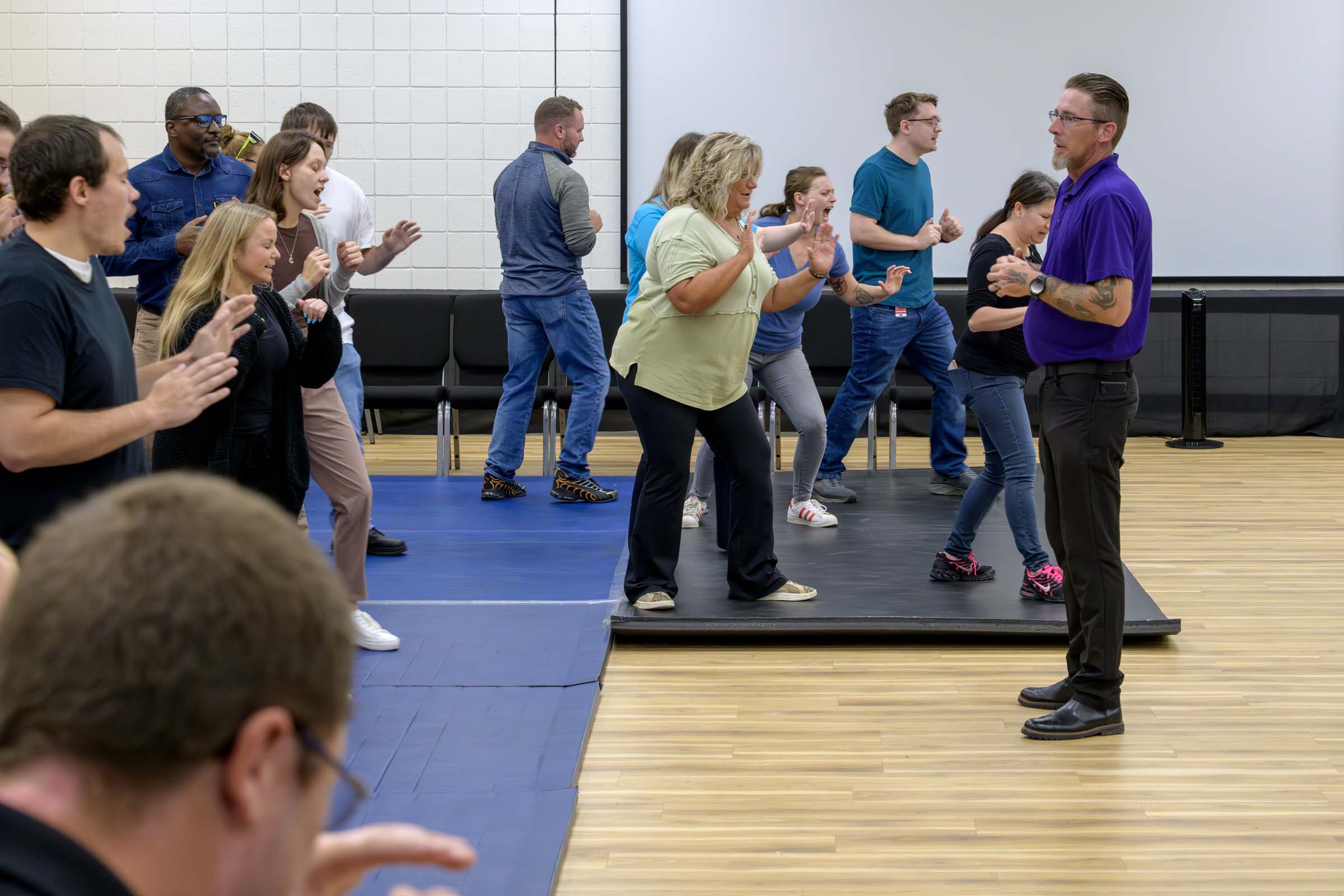
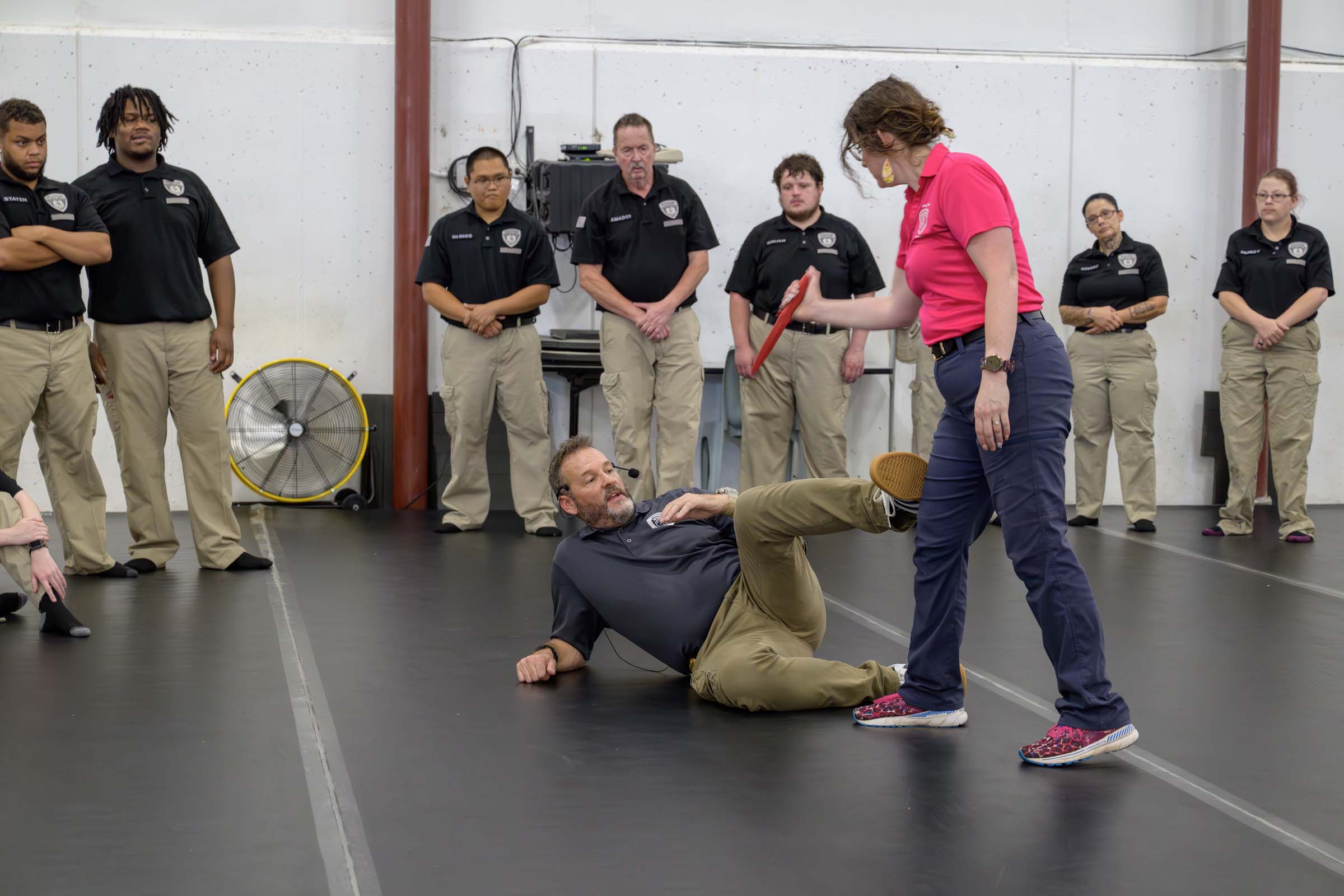
training officer, leads a class of cadets in
defensive tactics.
“It’s an honor to pass along their torch.”
Passing the Torch
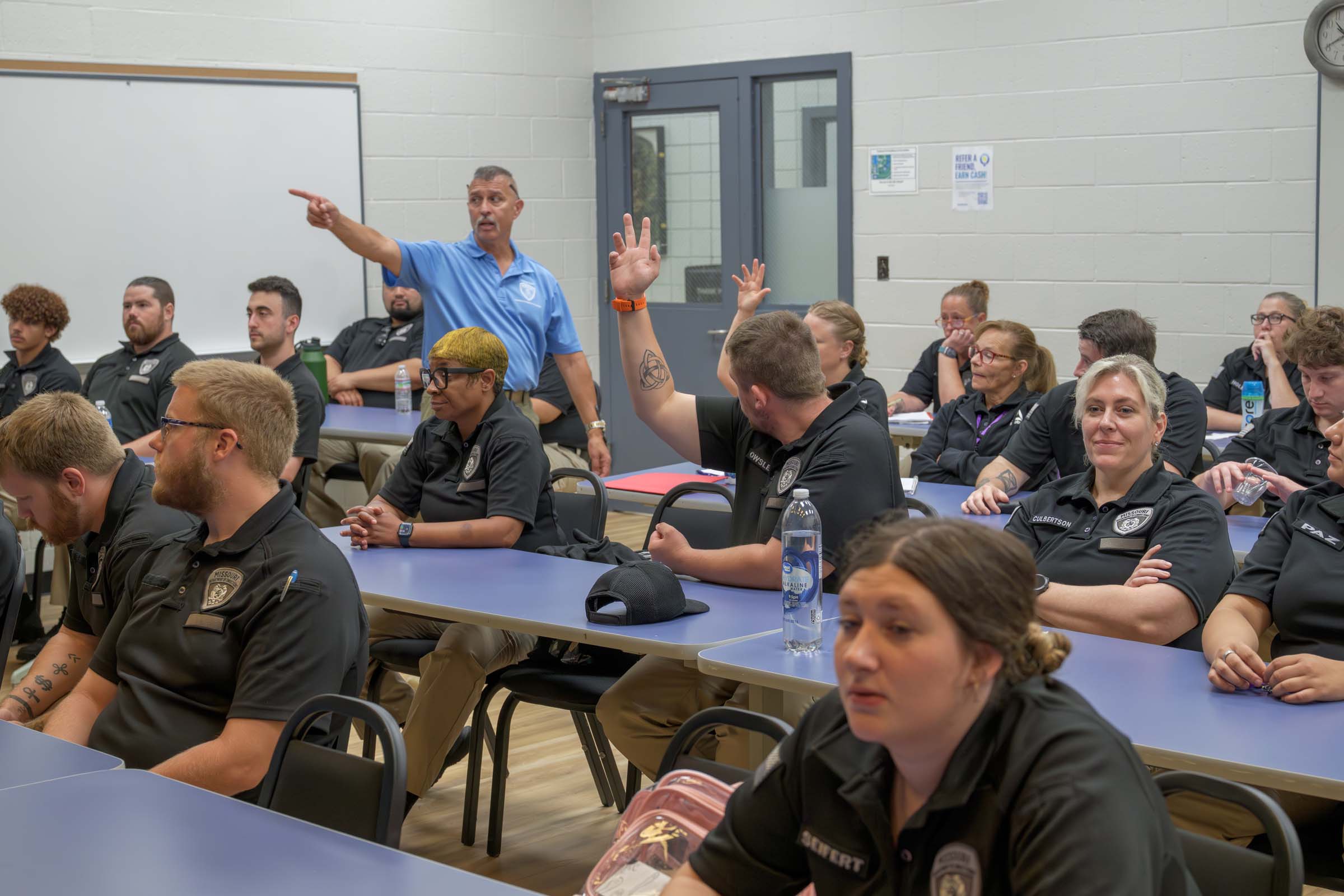
In the adjacent Clements Hall — where hundreds of cadets assume a defensive stance and shout “get back!” in unison — Montgomery is igniting that torch. The affable instructor has a knack for keeping things light and injecting humor while teaching deadly serious topics.
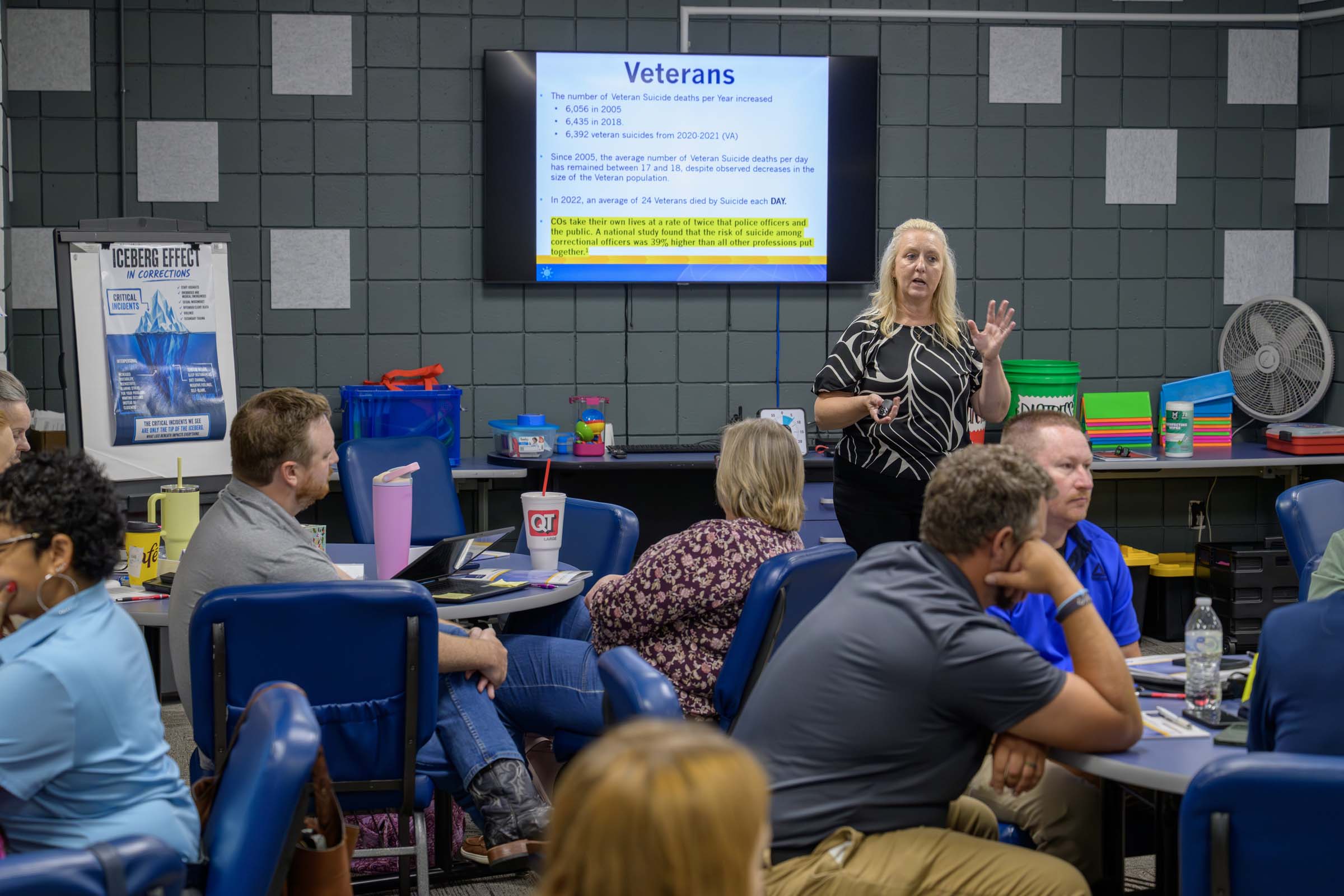
support coordinator, lectures MODOC staff
about post-traumatic stress disorder as
part of her Critical Incident Stress
Management (CISM) presentation.
Montgomery peppers his lessons with firsthand accounts from his career at Crossroads Correctional Center. His students, focused and engaged, hang on his every word.
“I can tell there are a lot of people who don’t know how to dance in here,” Montgomery says to a wave of chuckles. “Look at your feet to see if you’re balanced, and if you have to move them — you’re not. All right, let’s go!”
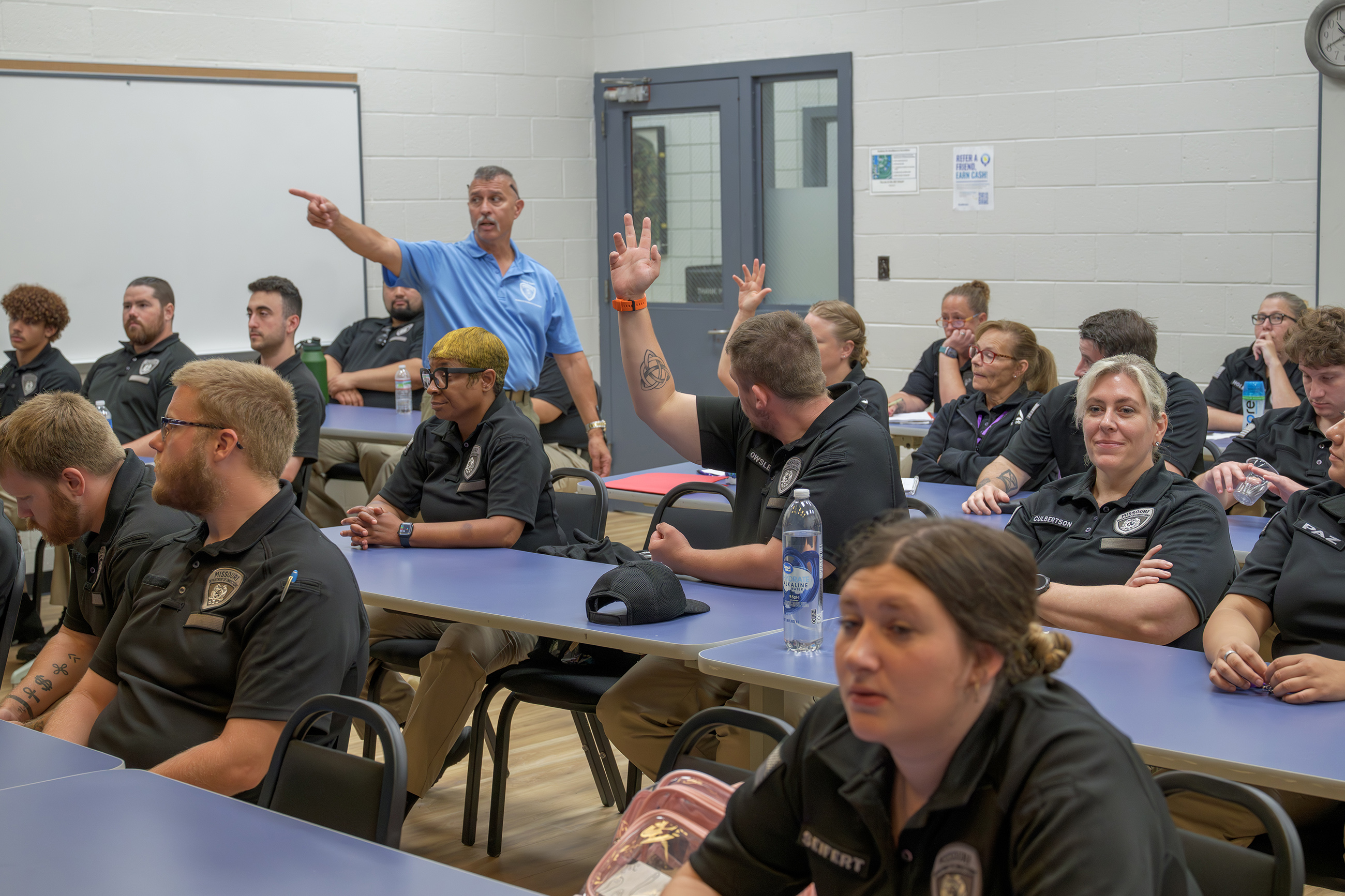
Down the hall, cadets in a classroom are reviewing warning signs for riots and disturbances with John Huber, staff development trainer. Next door, Dale Bode — another staff development trainer — goes over security threat groups.
In yet another classroom, employee support coordinator Christie Lewis is halfway through her Critical Incident Stress Management (CISM) presentation outlining the impacts of post-traumatic stress disorder (PTSD).

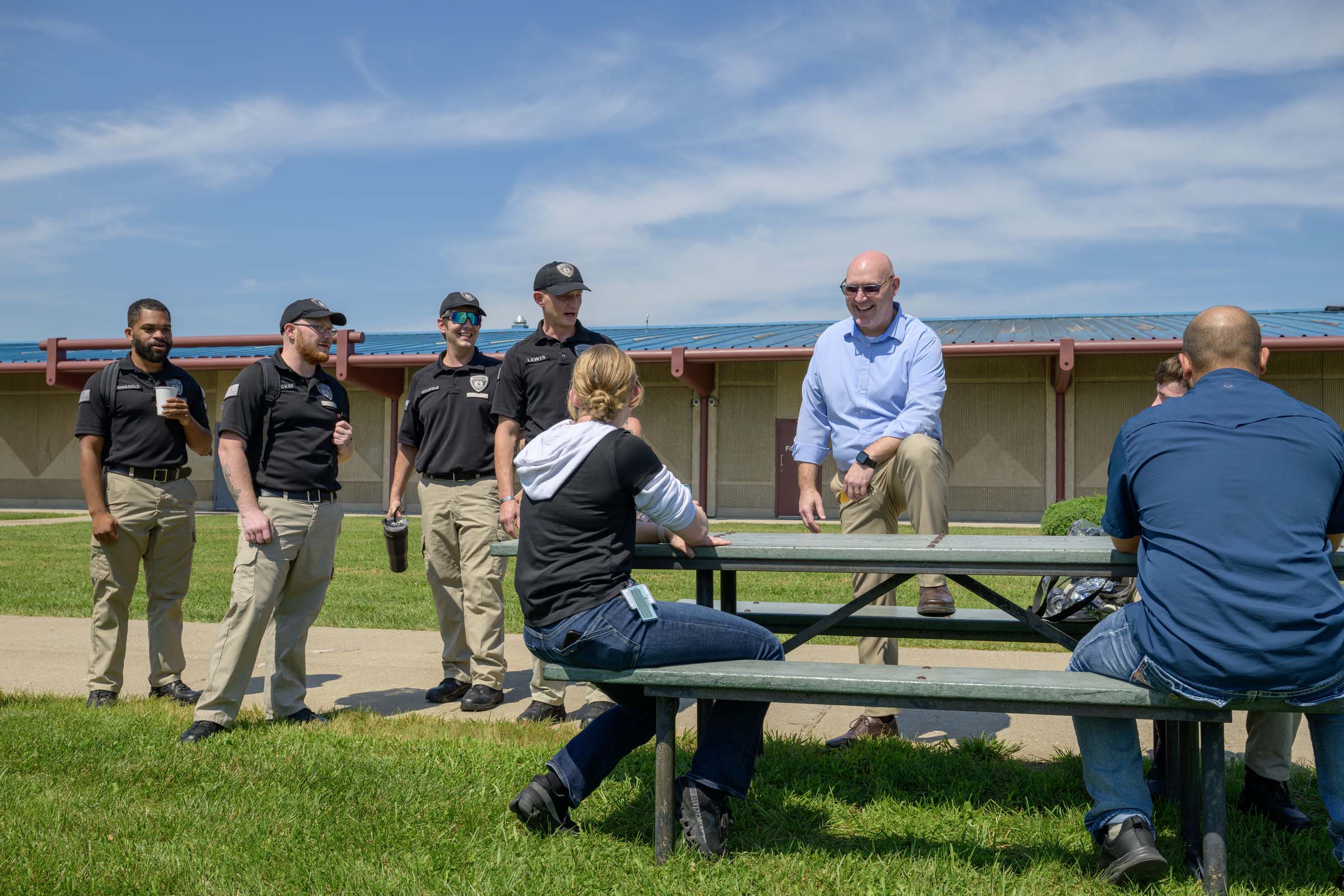
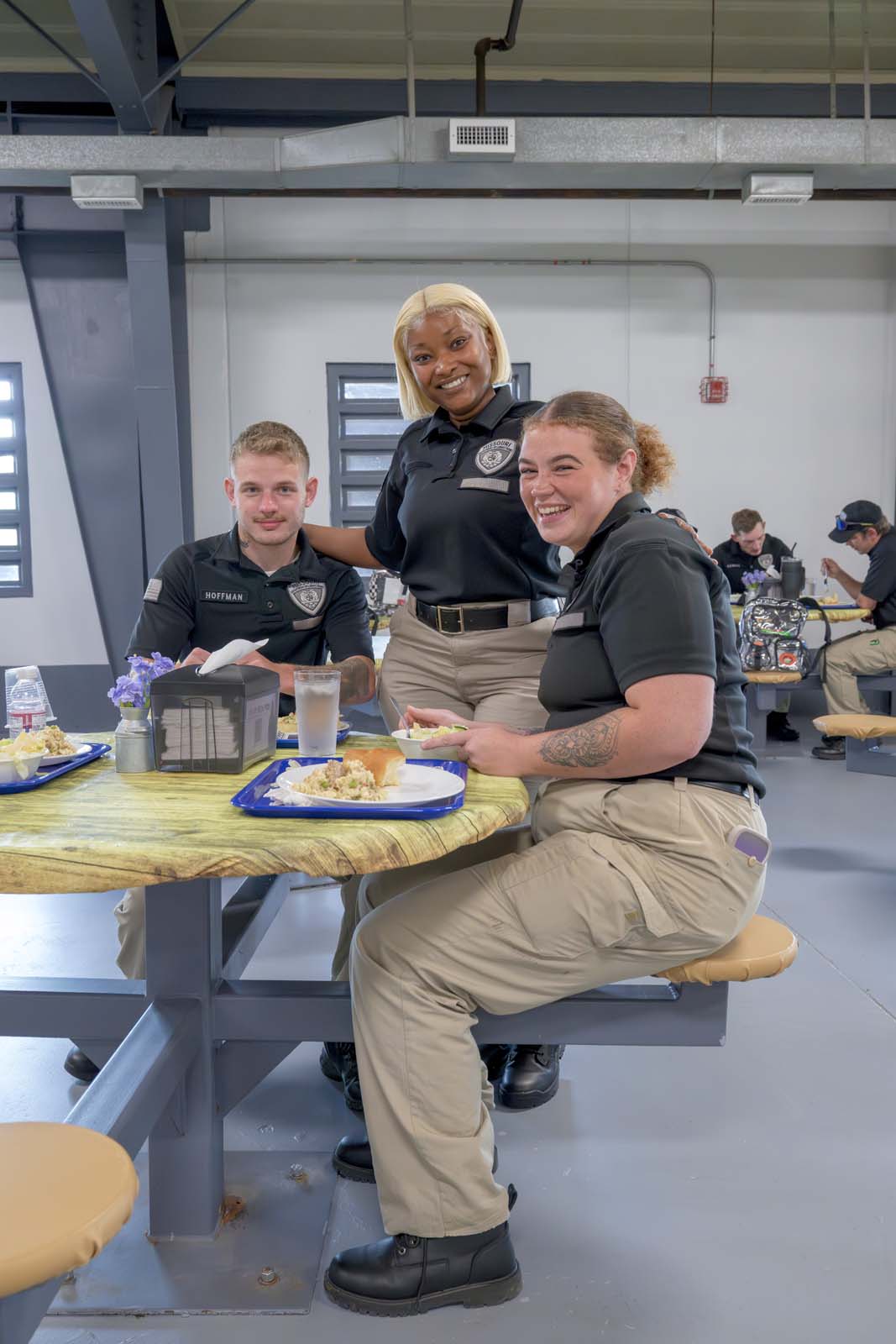
and a break from the class
schedule.
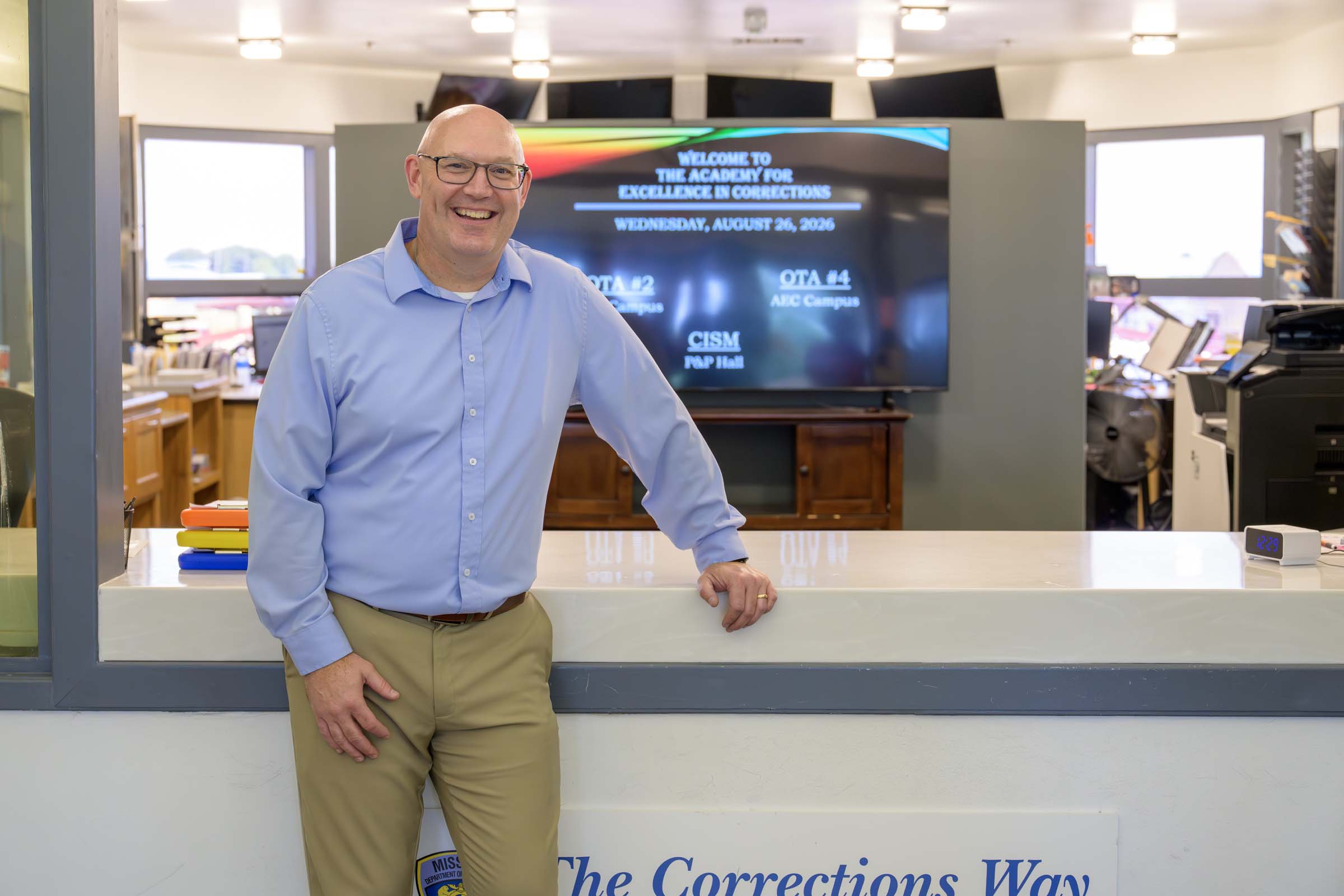
The AEC’s well-oiled operation runs under the watchful eye of Ryan Brownlow, chief administrative officer.
“I’m proud of the fact that we impact every officer who comes to the Department of Corrections and provide hands-on experience,” Brownlow said. “We also welcome people from all over the state — from the Bootheel, St. Louis, St. Joseph, the Ozarks — and they get to know each other and learn from one another. That’s pretty neat.”
As more laughter and camaraderie fill the cafeteria while cadets enjoy lunch — another benefit of the all-inclusive facility — cadet Tyler Lambert echoes Brownlow.
“I’ve really appreciated the bonds we’ve developed here during the training program,” said Lambert, a CO-I at SECC. “And I feel like I’ve made a few lifelong friends.”
A Culture of Support

On the cusp of retirement eligibility after 30 years as a CO with MODOC, Betty Lindsey has a massive reservoir of experience to draw from as a staff development trainer. There are practically no scenarios she hasn’t professionally witnessed, participated in or overcome throughout three decades.
Still, she’s not going anywhere.
“This is the most fulfilling job I’ve had at the DOC,” Lindsey said. “But I’m still glad I’ve had my career when I’m
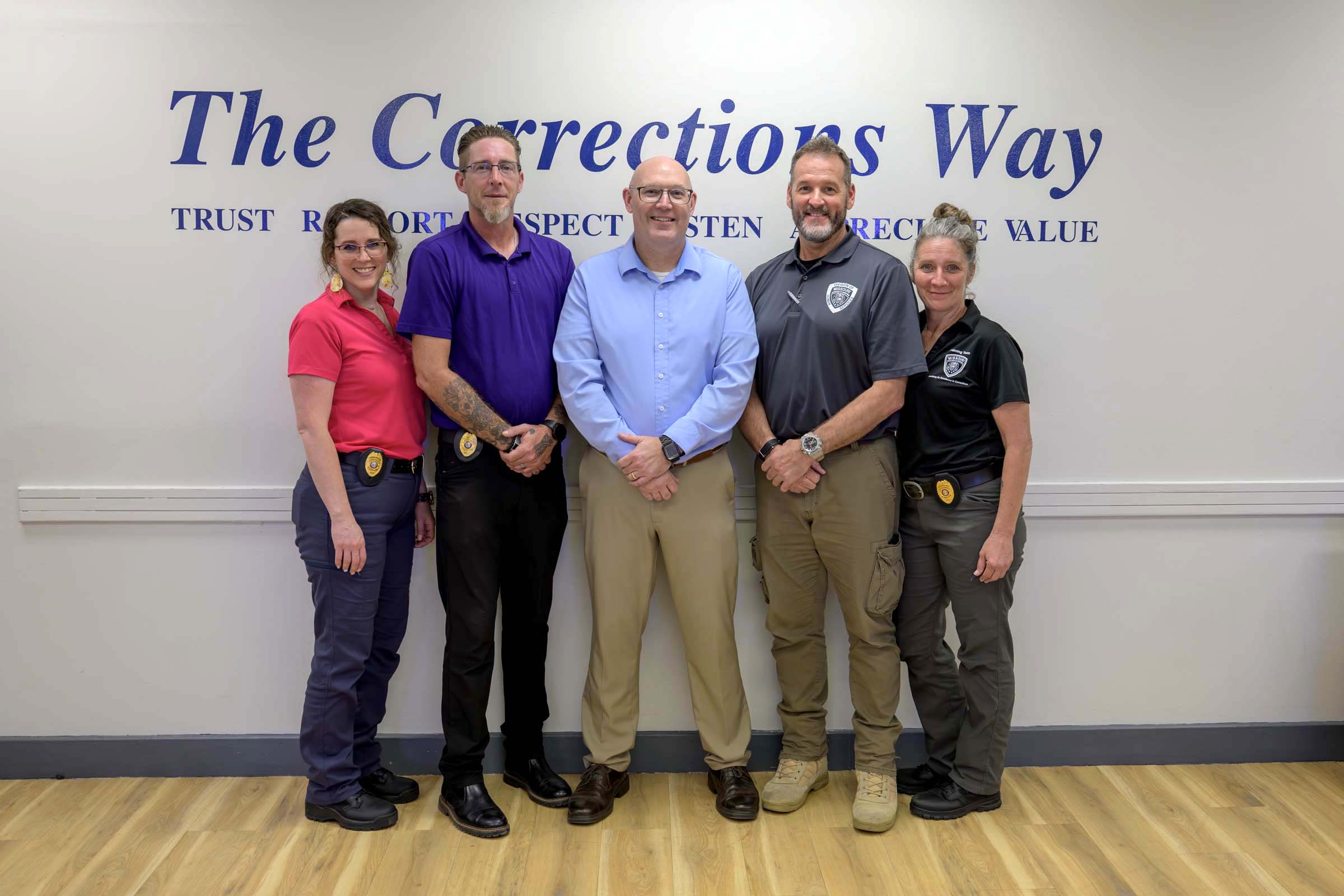
Brian Scheetz and Betty Lindsey.
teaching classes and having real one-on-one conversations. You have to have lived through it to offer guidance and instruction.”
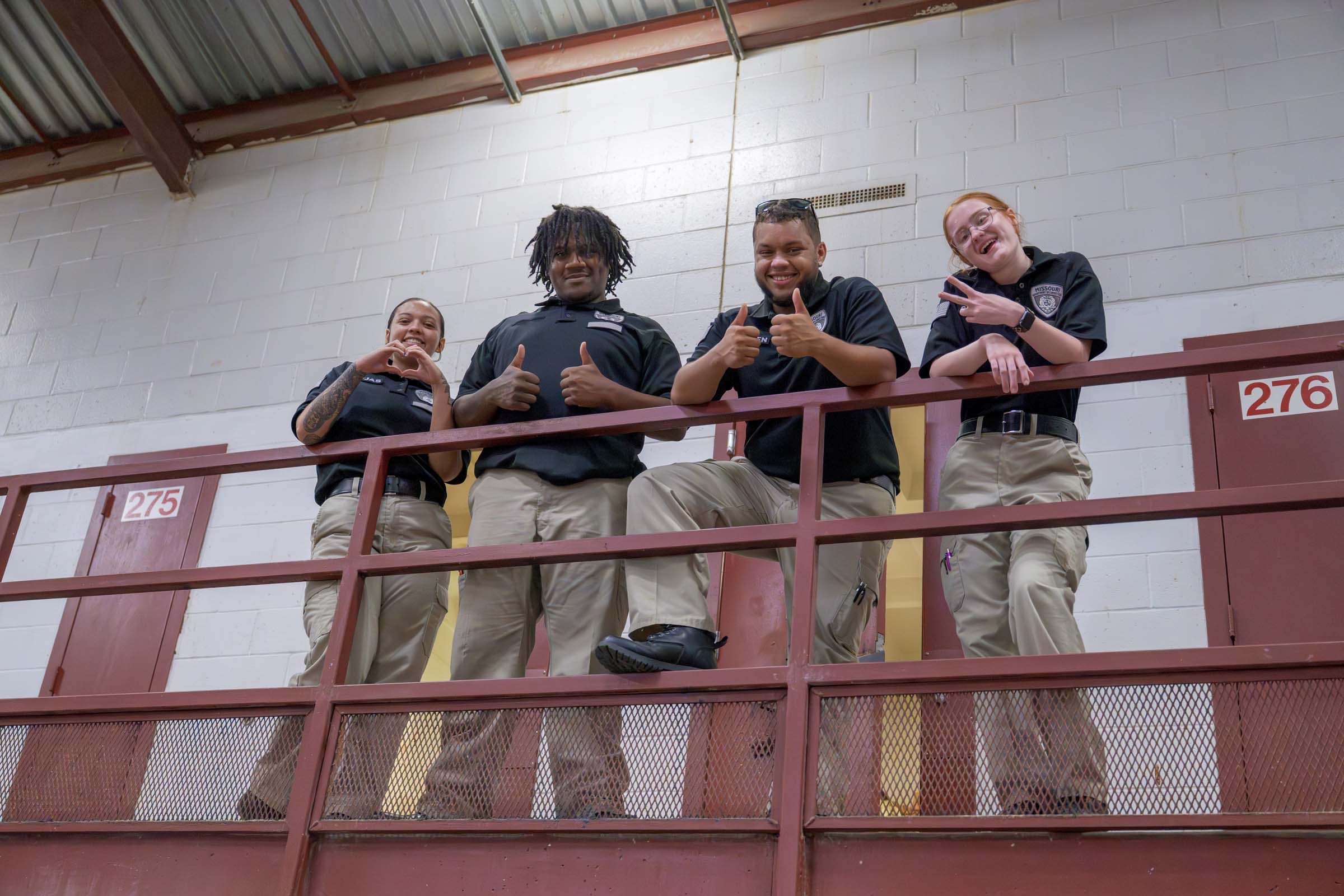
Lindsey’s colleagues are nearly unanimous in celebrating the AEC’s supportive team atmosphere. The instructors are cross-trained to teach practically every course, allowing for seamless shift coverage when teammates need it.
“I’m a huge people person,” said Missy Mauch, staff development trainer. “I love socializing, I love being in front of people and I love helping people. I get to help people improve — do things that help them in their institution, keep them safe, keep their coworkers safe and keep the residents safe. It’s a whole world of helping people. It’s also a way for me to show my personality — and avoid a stuffy desk job.”